Top, Professional and Reliable Manufacturer of Concrete Machinery – YG Machinery
IPhone/WeChat/WhatsApp: +86 13837159132
How Does a Self-Loading Concrete Machine Work?
On many small construction sites, concrete work is not slow because of mixing itself, but because too many steps are involved. Materials must be loaded, mixed, transported, and poured, often by different people using different machines. A self-loading concrete machine changes this process by putting all these steps into one workflow, controlled by a single operator. To understand whether this machine fits your project, it is important to first understand how it actually works on site, not just what it looks like on paper.
What “Self-Loading” Really Means On A Job Site
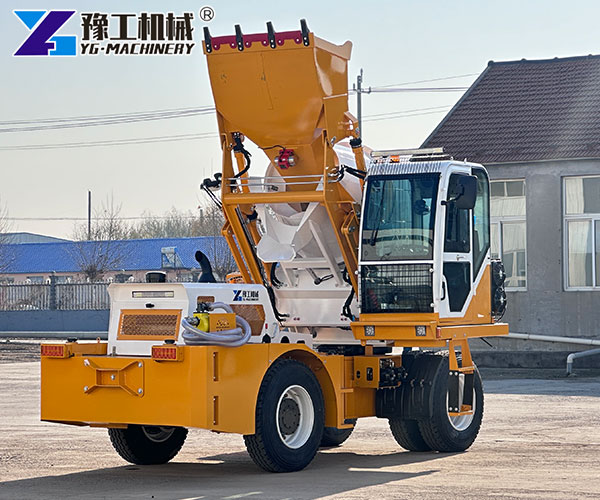
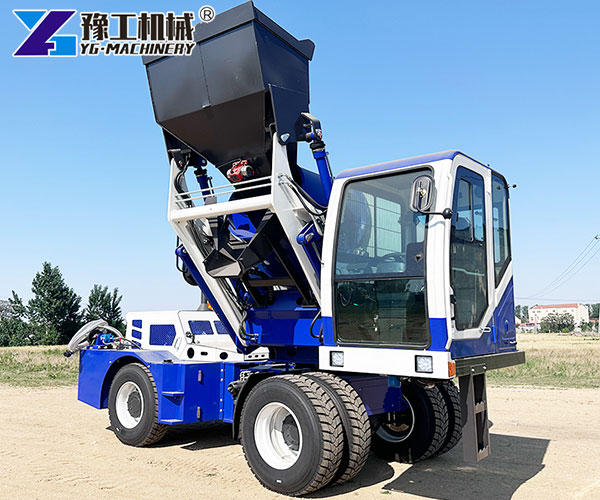
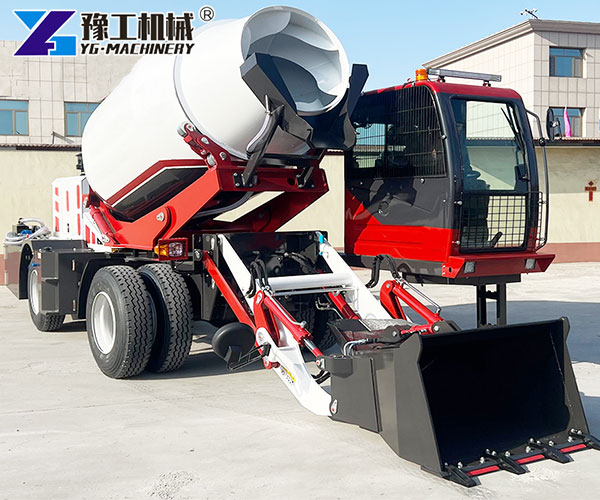
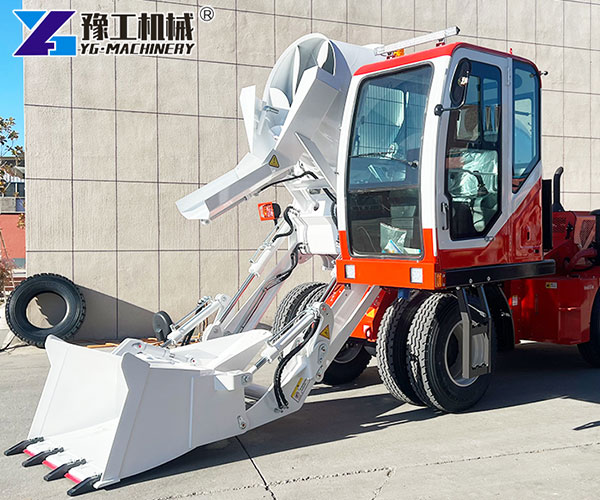
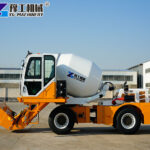
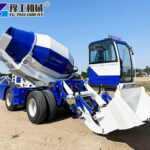
A self-loading concrete machine is designed to let one operator handle concrete production directly on site. Instead of relying on ready-mix trucks or separate mixers, this machine combines material loading, mixing, transport, and discharge into one workflow.
On most small and medium job sites, the goal is not maximum output per hour. The real goal is to finish work with fewer people, less waiting time, and lower total cost. This is where a self-loading concrete mixer truck changes how concrete work is done.
The working process starts with loading raw materials.
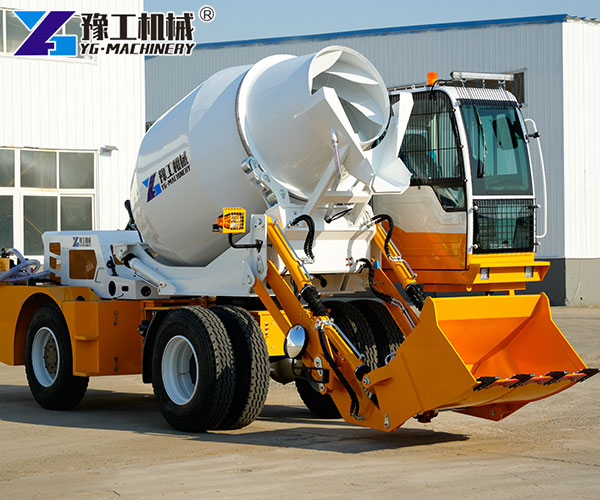
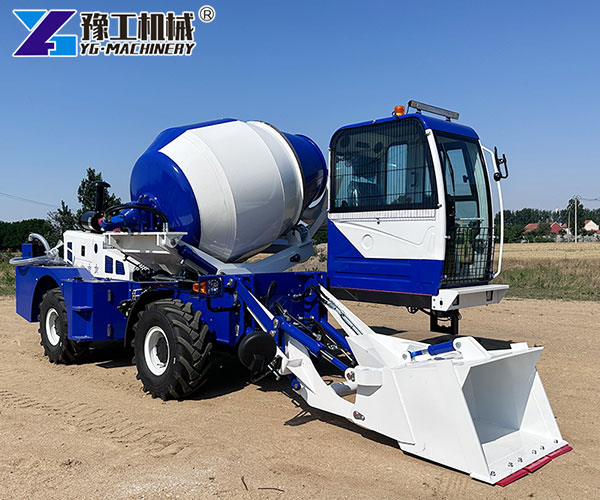
The machine uses a front-mounted loading bucket to collect sand, gravel, and cement from stockpiles on site. This means:
No wheel loader is required
No manual shovel loading
No separate material handling step
For rural projects or tight sites, this is important because equipment access is limited. The operator controls the bucket directly from the cab, making the loading process simple and fast.
Step 2: Water And Cement Dosing During Mixing
After loading, materials enter the mixing drum.
Water and cement are added during the mixing stage, not before. This allows the operator to adjust the mix based on:
Weather conditions
Material moisture
Required concrete consistency
Compared with manual mixing, this process offers better control and repeatability, even without laboratory-level accuracy. For slabs, foundations, and general construction, this level of control is usually sufficient.
Step 3: Mixing While Traveling To The Pouring Area
One key difference of a self-loading concrete machine is that mixing continues while the machine is moving.
This creates several advantages:
No waiting time after mixing
Concrete stays fresh until pouring
Short-distance transport does not affect quality
On sites where the pouring point is not fixed, this step keeps the workflow continuous. The operator does not need to stop, remix, or reload.
Step 4: Discharging Concrete At The Right Time
When the machine reaches the pouring area, concrete is discharged directly from the drum.
Depending on the job, this can be done:
Into formwork
Onto slabs or foundations
Into wheelbarrows for short-distance distribution
Because the operator controls the timing, concrete is poured only when it is ready, reducing waste and rework. In many projects, pumps are not needed, which further lowers cost.