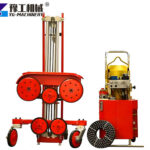
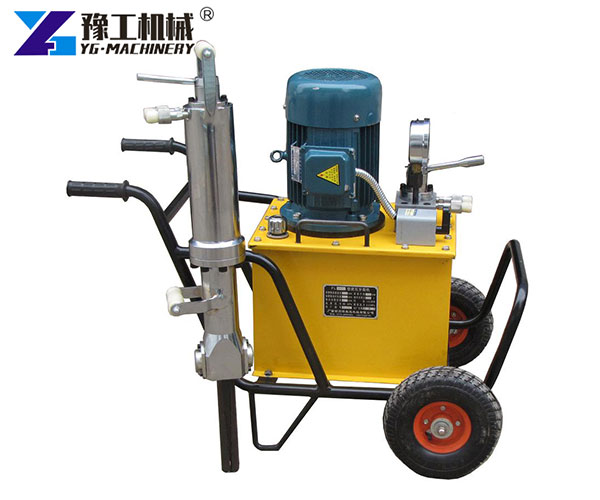
What Is A Rock Splitter Machine?
A Rock Splitter Machine is a hydraulic tool used to break rock and reinforced concrete with strong internal pressure. It works without blasting, so the process is safe and controlled. This machine creates a precise crack inside the material and pushes it apart. It is widely used where noise limits or safety rules do not allow explosives or large breaking hammers.
The machine is favored in:
- Construction sites close to homes and offices
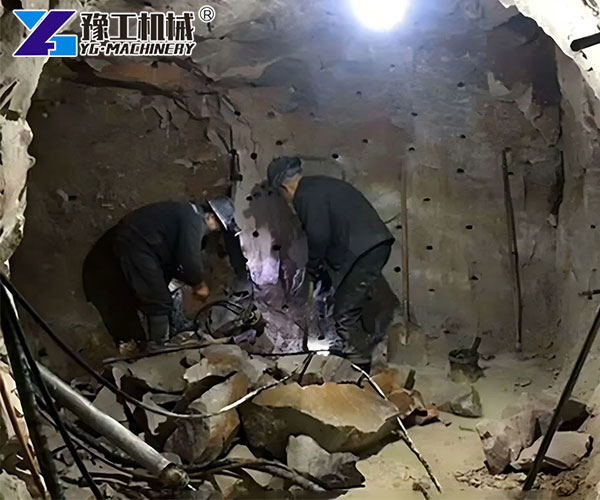
- Underground spaces with limited working room
- Quarry blocks that require clean cuts
- Concrete structures that need careful removal
The Rock Splitter Machine is known for reliability, high splitting force, and low disturbance to the surrounding environment.
WhatsApp/WeChat/Phone: 86 138 3715 9132
Product Parameters Of Rock Splitter Machine
YG offers different models to match job sizes. Common technical parameters include:
| Model | YG-250 | YG-350 | YG-450 |
| Wedge Length(mm) | 250mm | 350mm | 450mm |
| Piston Stroke(mm) | 90/220mm | 90/220mm | 90/220mm |
| Drilling Depth(mm) | >500mm | >700mm | >900mm |
| Punching Diameter(mm) | 42mm | 46mm | 46mm |
| Crack Width(mm) | 10-20mm | 10-20mm | 10-20mm |
| Cleavage Time(s) | 10-15/s | 10-15/s | 10-15/s |
| Splitting Force(T) | 500t | 800t | 800t |
| Weight(kg) | 240kg | 250kg | 260kg |
These parameters help users pick the right unit for their rock hardness and working space.
Working Principle of Rock Splitting Equipment
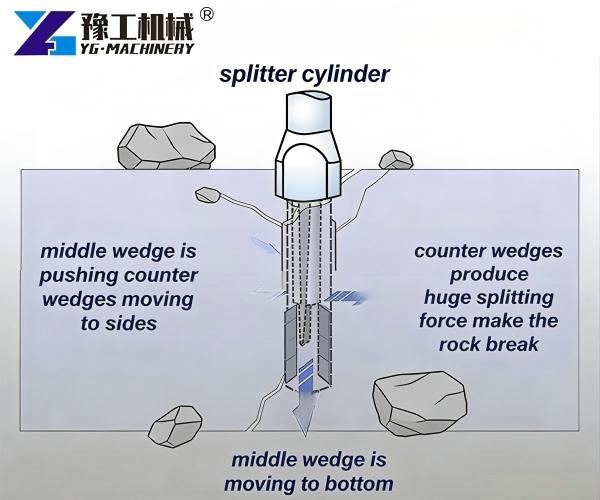
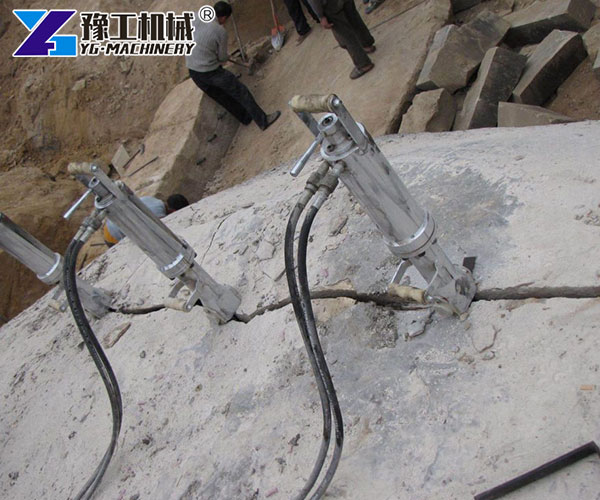
The hydraulic rock splitter uses hydraulic pressure to expand a central wedge between two side wedges. When placed inside a drilled hole, the pressure creates a wide internal crack and forces the rock to separate.
Basic working steps:
- Drill holes in the rock or concrete surface at planned positions
- Insert the wedge block into each hole
- Connect the cylinder to the hydraulic power station
- Apply pressure to expand the wedge and split the material
- Remove the split material in sections
Because the force comes from inside the material, there is no large vibration, little dust, and no flying debris.
Core Components Of Rock Splitting Equipment
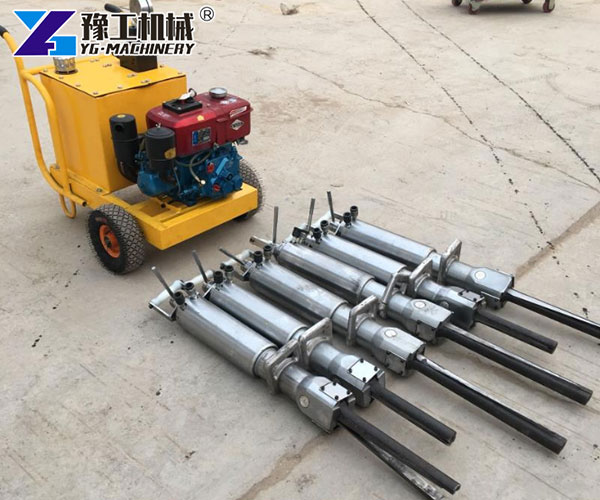
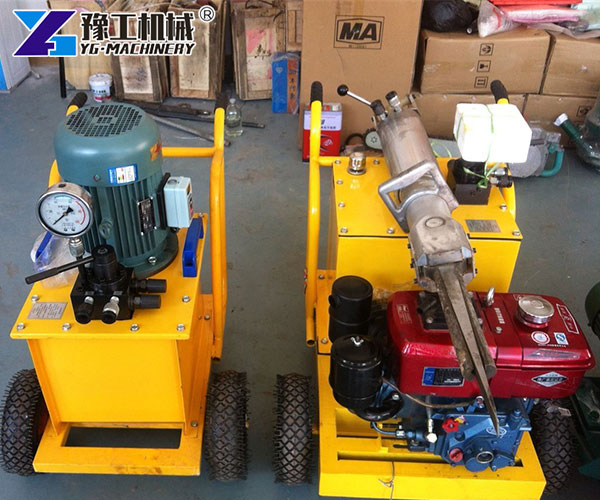
A rock-splitting equipment system includes three major parts:
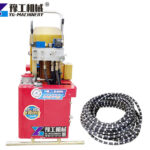
1. Hydraulic Power Station
- Provides high pressure to drive cylinders
- Diesel units fit outdoor sites
- Electric units fit areas with low noise rules
2. Splitting Cylinders
- Main force output part of the system
- Alloy steel body for longer life
- Available in multiple sizes for different force needs
3. Splitting Wedges
- Replaceable wedge sets for different hardness
- Precision-machined for fast splitting
- Strong enough for granite and reinforced concrete
These parts work together to deliver stable splitting power.
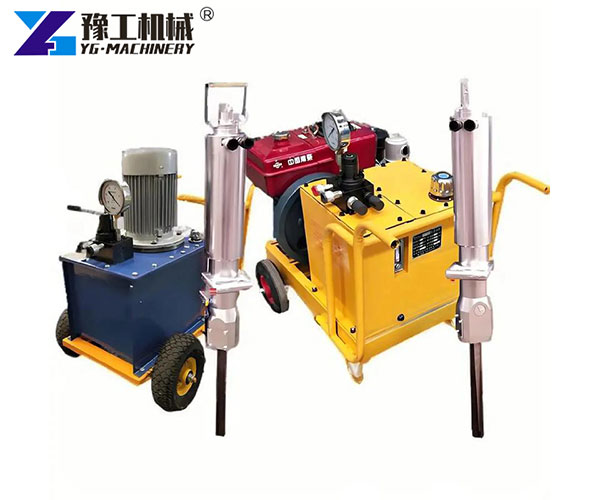
Product Types Of Rock Demolition Machine
YG provides two power choices for the rock demolition machine:
- Electric Rock Splitter Machine
- Lower noise
- Suitable for indoor demolition or residential areas
- Diesel Rock Splitter Machine
- Strong mobility and stable pressure
- Best for mountain road work or mining areas
Both types can connect several cylinders at the same time to improve efficiency.
Why Choose Non-Explosive Rock Demolition
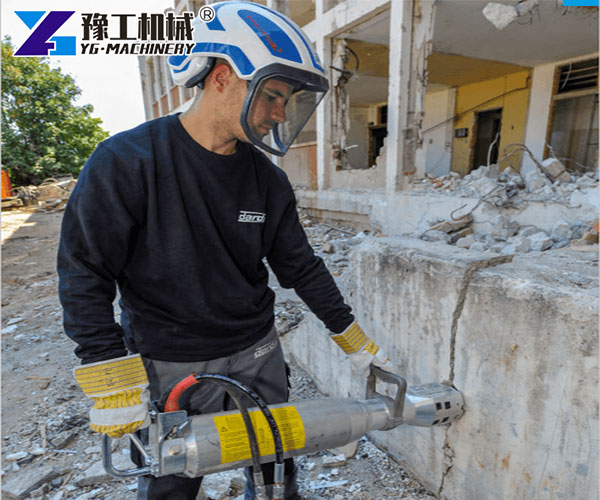
Choosing non-explosive rock demolition gives users more control and fewer safety risks. Key benefits:
- Safe demolition
- No vibration that may damage nearby buildings
- Very low noise and little dust
- No flying debris, so less risk
- Precise splitting
- Good for bridges, tunnels, and building foundations
- Keeps useful stone blocks intact in quarries
- Low running cost
- No explosive permits needed
- Less manpower than a large excavator hammers
- Fewer road closure requirements in cities
- Wide material range
- Granite, limestone, river boulders
- Thick reinforced concrete and old foundations
The method reduces risk while keeping high efficiency.
Applications of the Rock Splitter Machine
A Rock Splitter Machine supports many situations where blasting is not allowed or not suitable:
- Urban demolition close to homes, offices, and hospitals
- Expanding mountain roads, tunnels, and chambers
- Quarry block extraction with minimal waste
- Removing bridge decks, pillars, and foundation concrete
It gives contractors a safe way to work in tight or sensitive locations.
How To Choose The Right Rock Splitter Machine
Selecting the right model improves work speed and lowers cost:
- Match the splitting force to the rock hardness
- Hard granite needs more force
- Softer limestone needs fewer cylinders
- Pick a power option
- Diesel for mobility
- Electric for low noise zones
- Check on-site conditions
- Drilling machine availability
- Space for power station placement
- Plan the budget
- Choose the right number of cylinders
- Include wedge sets and drill bits as consumables
Choosing a suitable Rock Splitter Machine prevents delays and tool damage.
Customer Cases And Performance Feedback
Real project feedback shows clear advantages:
- A quarry improved block output by 30% with cleaner cracks
- A foundation project in a residential area required no blasting permits, saving weeks of approval time
- A tunnel job finished ahead of schedule because silent splitting allowed night work without complaints
These results show how a Rock Splitter Machine supports both safety and efficiency.
Frequently Asked Questions
Q1: Can the Rock Splitter Machine work in closed spaces?
Yes. It produces low noise and no explosive gas, so it is safe for tunnels and basements.
Q2: What drilling tools are needed?
A standard down-the-hole drill or handheld hydraulic drill with the required hole diameter is enough.
Q3: How long do the wedges last?
Service life depends on rock hardness, but wedge heads are replaceable and easy to maintain.
Q4: Does it work on reinforced concrete?
Yes. It splits the concrete first, then the steel bars can be cut with cutters.
Q5: How many cylinders can run at once?
Multiple cylinders can connect to one power station to increase daily output.