Wet shotcrete machines play a critical role in modern construction projects such as tunnel support, mining operations, hydropower works, and slope stabilization. Compared with dry shotcrete, wet shotcrete offers better concrete quality, lower rebound, and higher construction efficiency.
Understanding different wet shotcrete machine types is essential for contractors and project owners to select the right equipment for their specific working conditions.
What Is a Wet Shotcrete Machine
A wet shotcrete machine is designed to spray pre-mixed concrete through pipelines onto rock surfaces or structures at high speed. The concrete is mixed before pumping, ensuring stable quality and better bonding strength.
Wet shotcrete machines are widely used for:
- Tunnel initial support
- Underground mining reinforcement
- Slope and embankment protection
- Hydropower and civil engineering projects
WhatsApp/WeChat/Phone: 86 138 3715 9132
Why Wet Shotcrete Machine Types Matter
Different projects have very different requirements. Tunnel size, spraying volume, power supply, and safety standards all affect equipment selection.
Choosing the wrong type may lead to:
- Low spraying efficiency
- High rebound and material waste
- Frequent blockages and downtime
- Higher labor and maintenance costs
That is why understanding wet shotcrete machine types by classification is more important than simply comparing models or prices.
Wet Shotcrete Machine Types by Working Principle
Air-Driven Wet Shotcrete Machine
Air-driven wet shotcrete machines use compressed air to transport and spray concrete through pipelines. These machines are commonly used in small to medium-scale projects.
Main sub-types include:
- Rotor Type
- Simple structure
- Easy operation and maintenance
- Suitable for medium spraying volume
- Rotor-Piston Type
- Combines rotor and piston advantages
- More stable and continuous material flow
- Reduced pulsation and lower blockage risk
These machines are often selected where equipment simplicity and cost control are important.
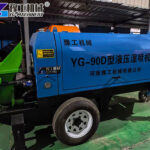
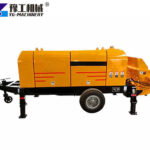
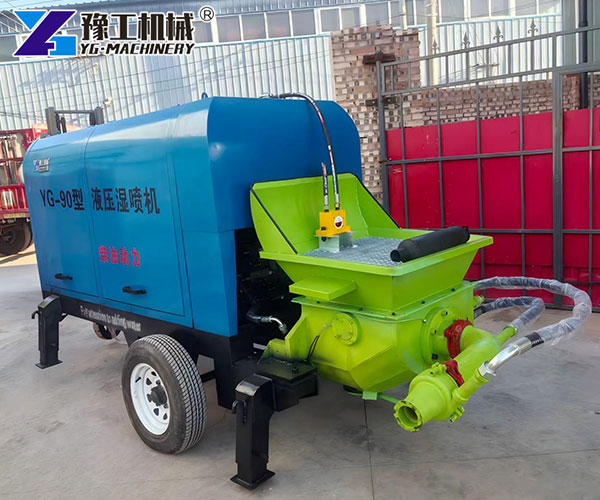
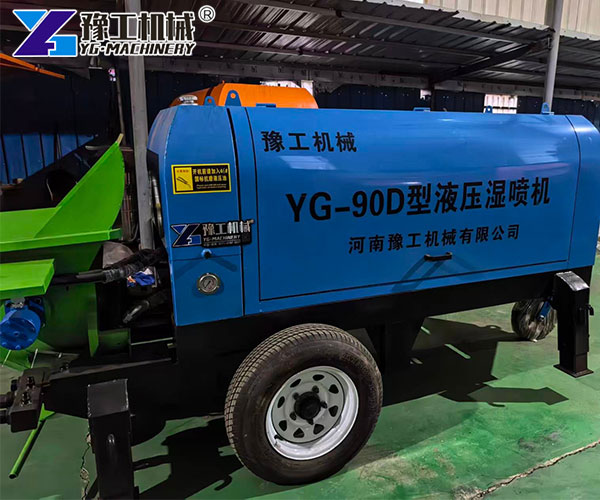
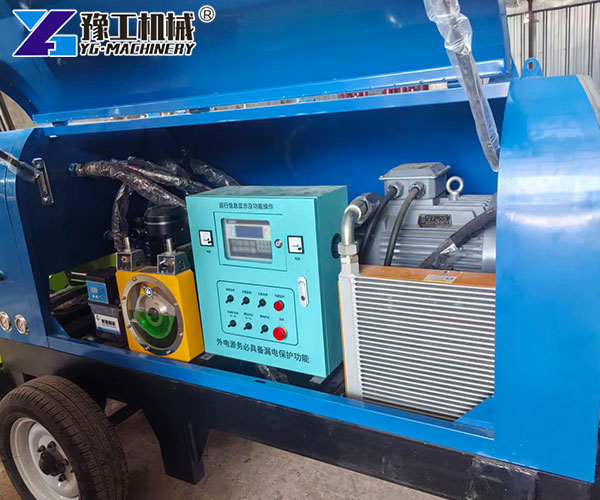
Pump-Driven Wet Shotcrete Machine(Hydraulic Wet Shotcrete Machine)
Pump-driven systems use hydraulic pumps to deliver concrete. This type has become the mainstream solution for large-scale projects.
Key advantages:
- Long pumping distance
- Stable pressure output
- Higher automation level
Common pump types include:
- Plunger Pump Type
- High pumping pressure
- Suitable for long-distance and high-elevation spraying
- Screw Pump Type
- Strong adaptability to concrete with aggregates
- Smooth flow with minimal pulsation
- Uniform spraying quality
Pump-driven wet shotcrete machines are widely used in modern tunnels and mining projects.
Wet Shotcrete Machine Types by Structure and Automation Level
Small or Portable Wet Shotcrete Machine
This type features compact size and easy transportation.
Typical applications:
- Narrow working spaces
- Small repair and reinforcement jobs
- Projects with limited access
They are cost-effective but limited in output capacity.
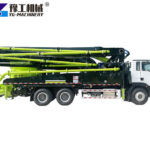
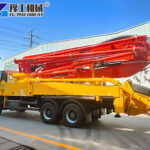
Truck-Mounted Wet Shotcrete Machine (Shotcrete Truck)
The wet shotcrete system is installed on a truck chassis.
Main features:
- Strong mobility between sites
- Fast relocation
- Suitable for multiple job locations
This type is often used in medium-sized projects where flexibility is required.
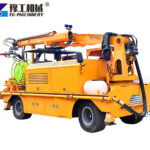
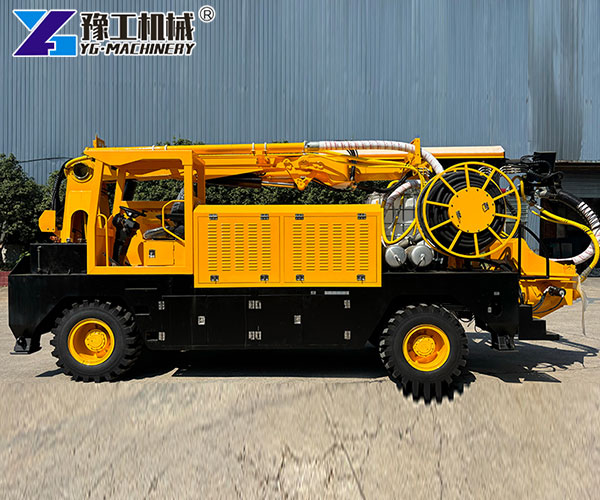
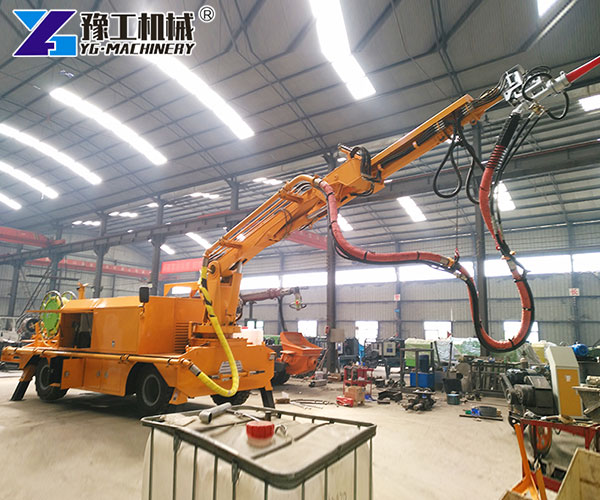
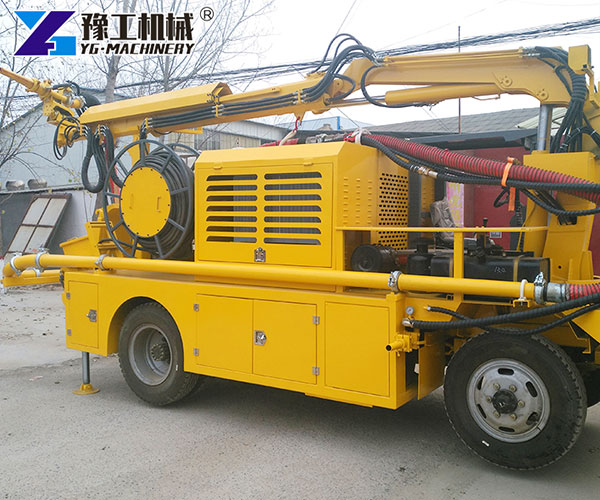
Wet Shotcrete Robot (Manipulator Type)
Wet shotcrete robots integrate traveling, pumping, and spraying functions into one system.
Key characteristics:
- Equipped with hydraulic robotic arms
- Remote or cabin-based operation
- High spraying accuracy and safety
Advantages:
- Spraying efficiency can exceed 30 m/h
- Significantly reduced labor intensity
- Improved safety in tunnel environments
This type is the preferred choice for large tunnels and underground projects.
Wet Shotcrete Machine Types by Power Source
Electric Wet Shotcrete Machine
Powered by electric motors, this type is suitable for projects with a stable power supply.
Advantages:
- Low emissions
- Reduced noise
- Ideal for underground and urban tunnels
Diesel Wet Shotcrete Machine
Diesel-powered machines are widely used in remote or outdoor sites.
Advantages:
- Independent from power grid
- Strong adaptability to harsh environments
- Reliable operation in unstable power conditions
Fully Electric Wet Shotcrete Machine
Fully electric wet shotcrete machines represent a new development trend.
Features:
- The entire system is driven by electric power
- Improved energy efficiency
- Reduced environmental impact
These machines are gaining attention in projects with strict environmental standards.
Special Wet Shotcrete Machine Types
Double-Nozzle Wet Shotcrete Machine
Equipped with two spray nozzles, this type allows simultaneous operation.
Benefits:
- Higher spraying efficiency
- Suitable for large cross-section tunnels
Explosion-Proof Wet Shotcrete Machine
Designed for coal mines and hazardous environments.
Key characteristics:
- Explosion-proof electrical components
- Compliance with strict safety standards
- Reliable operation in gas-prone areas
Key Differences Between Wet Shotcrete Machine Types
Different wet shotcrete machine types vary in:
- Spraying capacity
- Mobility and structure
- Power source requirements
- Automation level
- Initial investment and operating cost
Understanding these differences helps buyers avoid over-specification or underperformance.
How to Choose the Right Wet Shotcrete Machine Type
When selecting a wet shotcrete machine, buyers should consider:
- Project scale and daily spraying volume
- Tunnel cross-section or slope size
- Available power supply
- Labor skill level
- Budget and long-term operation plan
Large tunnel projects usually choose wet shotcrete robots, while small slope protection works often use rotor or compact pump-driven machines.
Common Mistakes in Wet Shotcrete Machine Selection
- Focusing only on price
- Ignoring site conditions
- Choosing oversized equipment
- Underestimating maintenance and training needs
Correct matching between machine type and project conditions is the key to long-term efficiency.
Who Should Use Different Wet Shotcrete Machine Types
- Small contractors: portable or rotor-type machines
- Mining companies: pump-driven or explosion-proof machines
- Tunnel contractors: wet shotcrete robots with manipulators