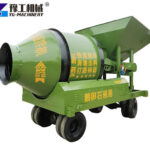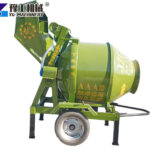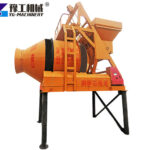
A Forced Concrete Mixer is widely used because modern construction needs stable concrete quality and fast production. In many projects, uneven mixing can cause cracks, low strength, and rework.
Compared with gravity mixers, forced mixing gives clear advantages:
- Concrete is mixed evenly, even with a low water ratio
- Mixing time is shorter for each batch
- Suitable for commercial concrete and engineering projects
In ready-mix plants and job sites, forced mixers help contractors keep quality stable while improving daily output.
What Is A Forced Concrete Mixer
A Forced Concrete Mixer is a machine that uses rotating shafts and blades to mix materials by strong mechanical force. All materials are pushed, cut, and mixed at the same time.
Main working principle:
- Materials are forced to move by mixing blades
- Strong shear and rolling action improve uniformity
- The mixing result is not affected by gravity only
Core difference from gravity mixers:
- The gravity mixer relies on drum rotation
- Forced mixer controls mixing by blade design and speed
This makes forced mixers suitable for strict concrete quality requirements.
WhatsApp/WeChat/Phone: 86 138 3715 9132
Product Parameters of Forced Concrete Mixer for Sale
Common parameters of forced concrete mixers include:
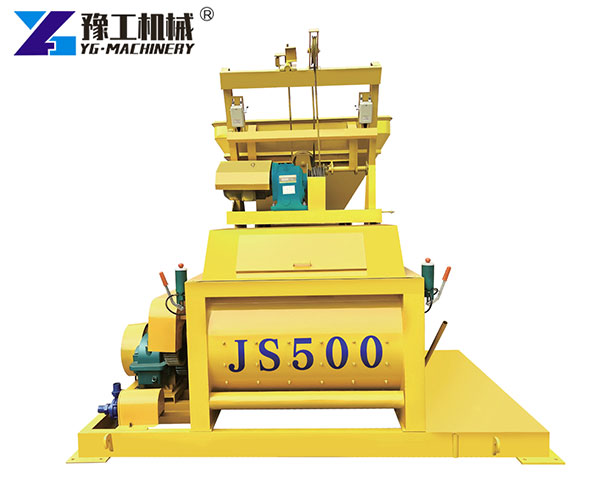
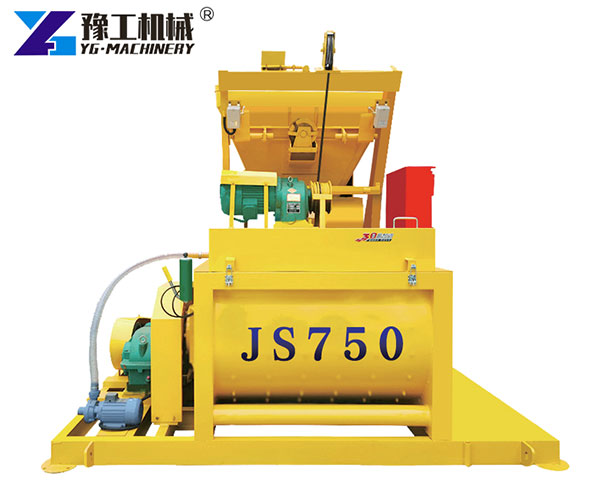
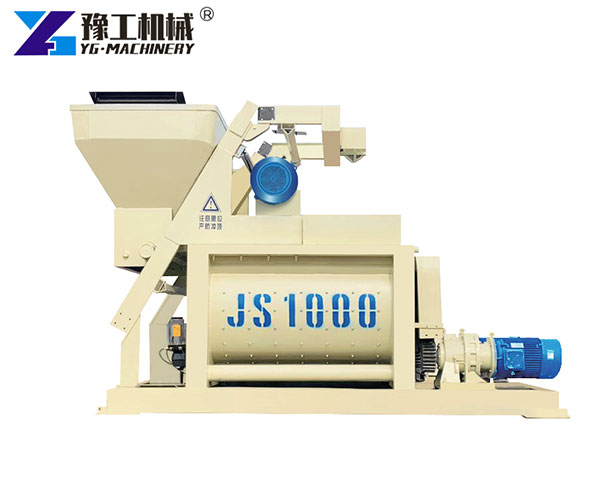
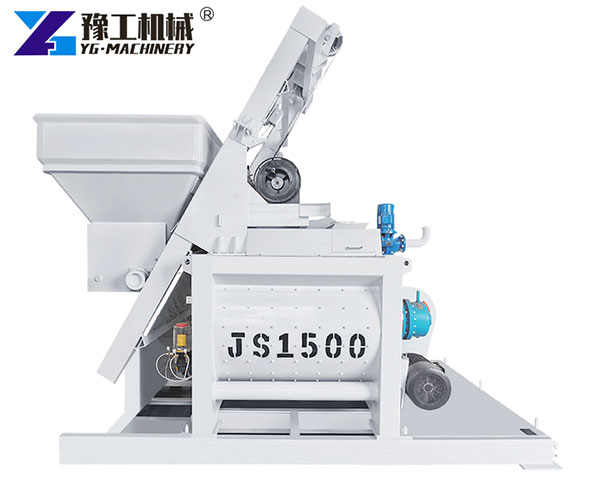
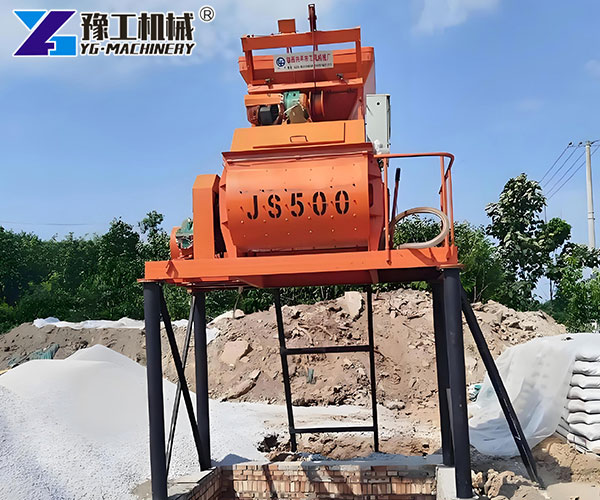
| Model | JS-500 | JS-750 | JS-1000 | JS-1500 | JS-2000 |
| Stirring motor power | 18.5kw | 30kw | 37kw | 44kw | 60kw |
| Increase motor power | 5.5kw | 7.5kw | 11kw | 15kw | 18.5kw |
| Water pump motor power | 1.1kw | 1.1kw | 3kw | 3kw | 4kw |
| Overall size | 4460*3050*5225mm | 4950*3650*6225mm | 8765*3436*9540mm | 9645*3436*9700mm | 10720*3870*10726mm |
| Total Weight | 3.1T | 4.2T | 5.8T | 9.86T | 13.5T |
| Discharge capacity | 500L | 750L | 1000L | 1500L | 2000L |
| Feeding capacity | 800L | 1200L | 1600L | 2400L | 3200L |
| productivity | ≥25M3/H | ≥37.5M3/H | ≥50M3/H | ≥75M3/H | ≥100M3/H |
| Rotating speed of mixing blade | 35R/MIN | 31R/MIN | 25.5R/MIN | 25.5R/MIN | 23R/MIN |
| Hopper lifting speed | 18M/MIN | 18M/MIN | 21.9M/MIN | 23M/MIN | 26.8M/MIN |
| Maximum particle size of aggregate | 80MM/60MM | 80MM/60MM | 80MM/60MM | 80MM/60MM | 80MM/60MM |
| Unloading height | 1.8-4.5M | 1.8-4.5M | 1.8-4.5M | 1.8-4.5M | 1.8-4.5M |
Exact parameters depend on project scale and daily output needs.
How A Forced Concrete Mixer Works
Material loading is done through a hopper or a conveyor. Cement, sand, aggregate, and water enter the mixing chamber.
The mixing process includes:
- Mixing shafts rotate at a fixed speed
- Blades push materials forward and backward
- Strong shear breaks material clusters
After mixing, concrete is discharged from the bottom. The mixing cycle is controlled by time settings, allowing continuous operation on site.
Key Benefits Of Using A Forced Concrete Mixer
Using a Forced Concrete Mixer brings clear benefits for construction users:
- More uniform mixing and stable concrete strength
- Suitable for different mix designs and materials
- Shorter mixing cycle improves productivity
- Ideal for engineering and continuous work
These advantages make forced mixers a key part of modern concrete mixing equipment.
Main Types Of Forced Concrete Mixers
Single Shaft Forced Concrete Mixer
This type is simple in structure and easy to maintain. It is suitable for small and medium projects with stable mix designs.
Twin Shaft Concrete Mixer
A twin-shaft concrete mixer uses two synchronized shafts for a stronger mixing force. It is widely used in concrete batching plants and large projects.
Other classifications include:
- Fixed type vs mobile type
- Engineering type vs industrial concrete mixer
Each type fits different job site needs.
Technical Features That Affect Mixing Performance
Several technical factors decide mixing quality:
- Shaft and blade design affect material flow
- The drive system and gearbox ensure a stable speed
- Mixing capacity must match daily output
- The control system improves safety and operation
Reliable concrete mixing equipment helps reduce downtime and maintenance costs.
How To Choose The Right Forced Concrete Mixer
When selecting a Forced Concrete Mixer for Sale, buyers should consider:
- Project type and daily concrete demand
- Complexity of concrete mix ratio
- Available space at the job site
- Spare parts supply and maintenance cost
For continuous projects, industrial models offer better long-term value.
When A Forced Concrete Mixer Is NOT Recommended
A forced mixer may not be the best choice in some cases:
- Very small and low-frequency projects
- Simple mortar mixing only
- Temporary jobs with low-quality demand
- Sites without stable power or foundation
Choosing the right equipment avoids unnecessary cost.
Application Scenarios
Forced concrete mixers are commonly used in:
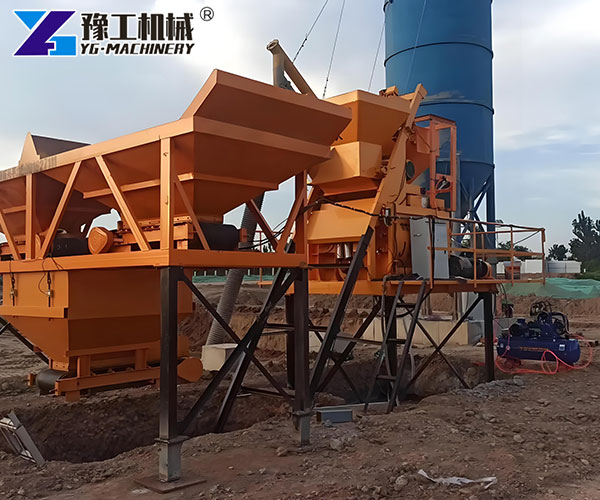
- Commercial concrete batching plants
- Construction contractors and builders
- Precast concrete factories
- Municipal and infrastructure projects
Their stable performance supports long-term construction needs.
Frequently Asked Questions
Is a compulsory concrete mixer suitable for dry concrete?
Yes, a compulsory concrete mixer can handle dry and low-slump concrete better than gravity mixers.
How long does one mixing cycle take?
Usually 30 to 60 seconds, depending on capacity and material type.
Is it easy to maintain?
Daily maintenance is simple, mainly checking blades, shafts, and lubrication points.