Top, Professional and Reliable Manufacturer of Concrete Machinery – YG Machinery
IPhone/WeChat/WhatsApp: +86 13837159132
Types of Concrete Pumps: How to Choose the Right Pump for Your Project
Concrete pumps play a crucial role in modern construction, enabling the efficient transportation of concrete from the mixer to the precise pouring location. However, many buyers and contractors are confused by the different names and classifications used in the market. This guide explains the types of concrete pumps based on their real working principles and job-site applications.
Why Understanding Different Types of Concrete Pumps Matters
Choosing the wrong type of concrete pump can lead to:
Low construction efficiency
Higher labor costs
Poor site adaptability
Unnecessary equipment investment
By understanding how concrete pumps are classified and where each type performs best, contractors and equipment buyers can make smarter, more cost-effective decisions.
From a functional and engineering perspective, concrete pumps are best classified by whether they are equipped with a placing boom. This is the most fundamental distinction.
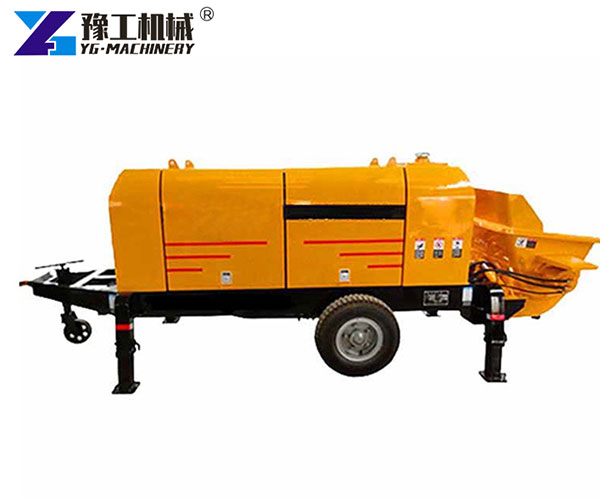
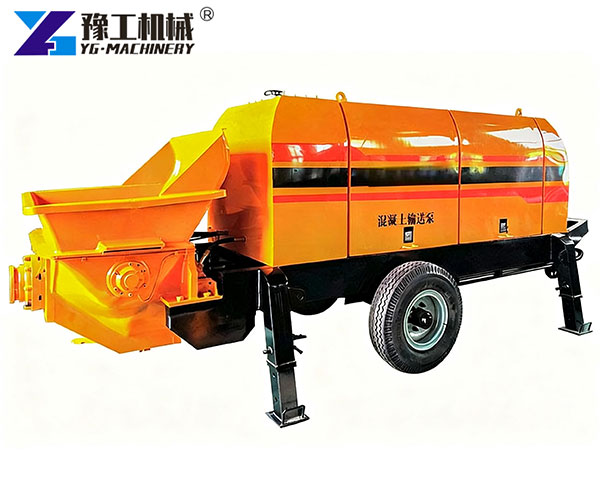
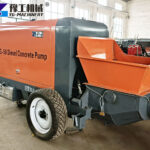
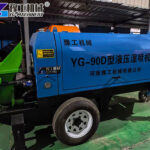
Line Concrete Pump (Without Boom)
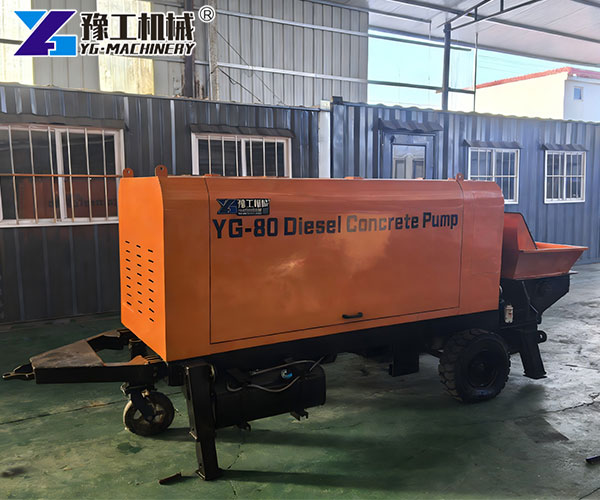
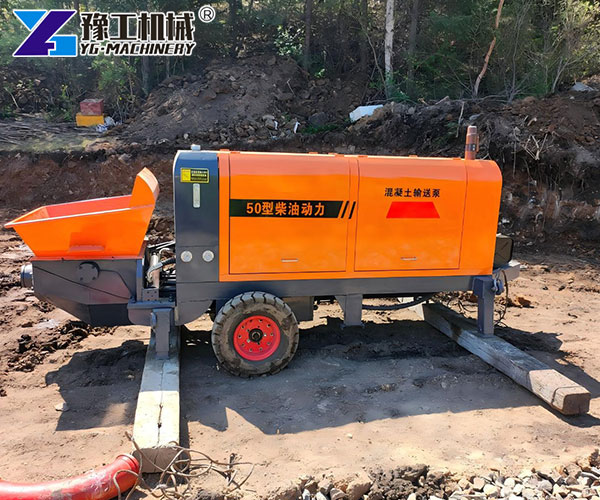
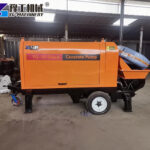
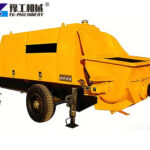
A line concrete pump transports concrete through steel or rubber pipelines to the pouring point. It does not include a placing boom, which means the concrete flow direction is controlled by manually arranged pipelines.
Key characteristics:
No placing boom
Concrete delivered through pipelines
Flexible pipe layout
Strong pumping pressure
Typical applications:
Building foundations
Basements and indoor construction
Small to medium-sized projects
Jobsites with limited space
Line concrete pumps are valued for their adaptability, lower cost, and ability to work in confined areas where boom pumps cannot operate.
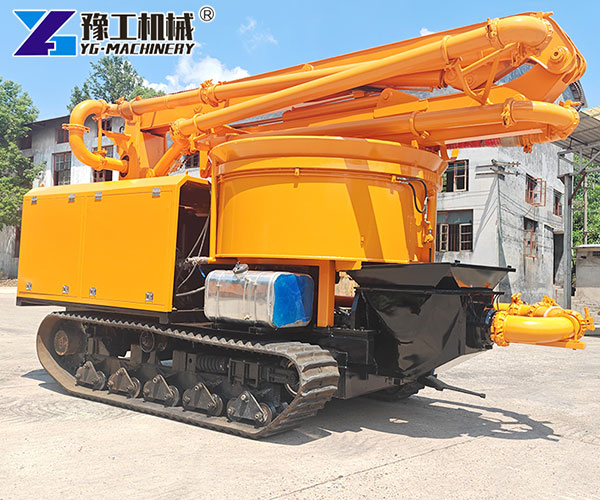
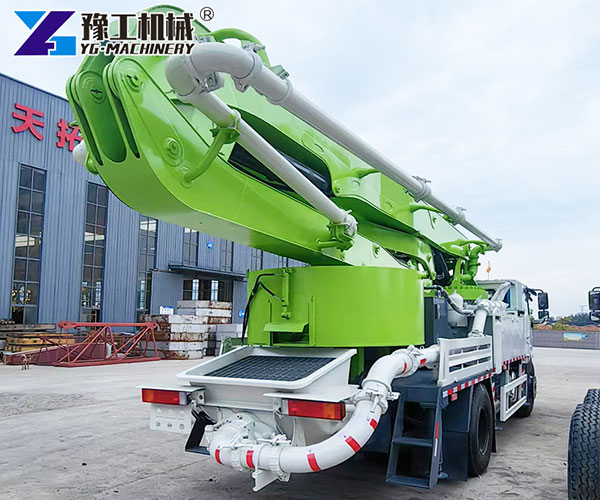
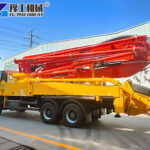
A boom concrete pump integrates a hydraulic placing boom with the pumping system. The boom can rotate, extend, and position the concrete outlet precisely over the pouring area.
Key characteristics:
Integrated placing boom
Large coverage radius
High pouring efficiency
Reduced labor requirement
Typical applications:
High-rise buildings
Large commercial projects
Bridges and infrastructure works
Projects with continuous large-volume concrete pouring
Boom concrete pumps are designed for speed and productivity, especially where large areas need to be poured quickly.
How to Choose the Right Type of Concrete Pump for Your Project
When selecting among different types of concrete pumps, consider the following factors:
Project size: Small and medium projects often favor line pumps, while large projects benefit from boom pumps.
Site conditions: Confined or indoor sites are better suited for line concrete pumps.
Budget: Line pumps provide a cost-effective solution, especially for contractors starting.
Construction schedule: Tight deadlines may justify the higher efficiency of boom pumps.
Matching the pump type to real job needs ensures better performance and long-term value.
Conclusion: Selecting Concrete Pumps Based on Real Job Needs
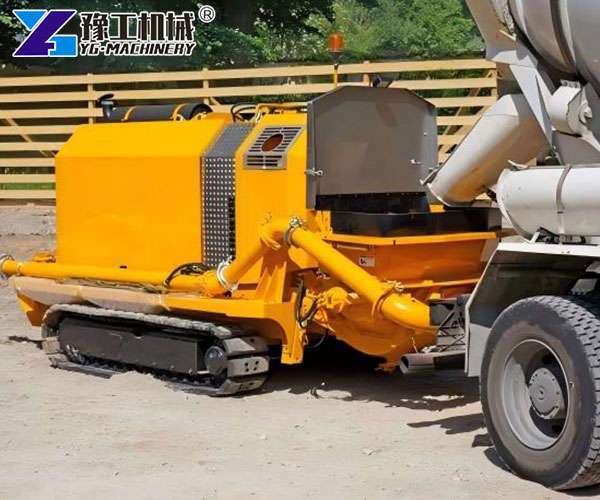
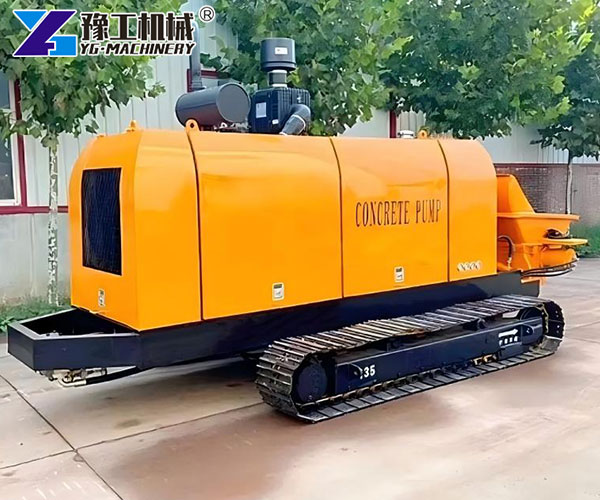
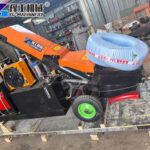
Understanding the types of concrete pumps begins with distinguishing between line concrete pumps and boom concrete pumps, followed by further evaluation of mobility options, including trailer, truck-mounted, and crawler designs.
Rather than choosing equipment based on name alone, successful contractors focus on structure, mobility, site conditions, and efficiency requirements. With the right selection strategy, concrete pumps become powerful tools for improving construction quality and productivity.