Top, Professional and Reliable Manufacturer of Concrete Machinery – YG Machinery
IPhone/WeChat/WhatsApp: +86 13837159132
Concrete Curb Machine Price Guide
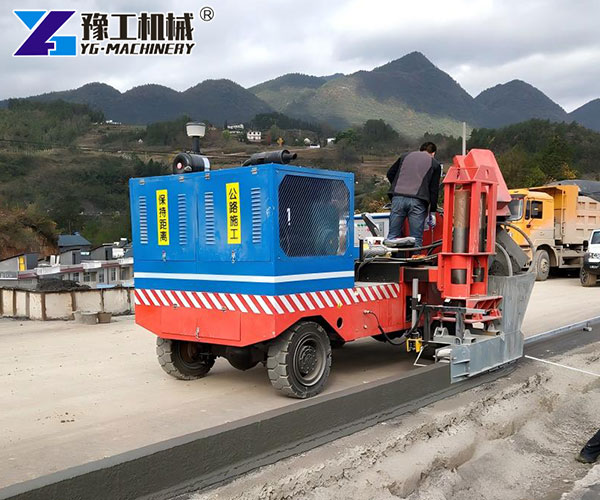
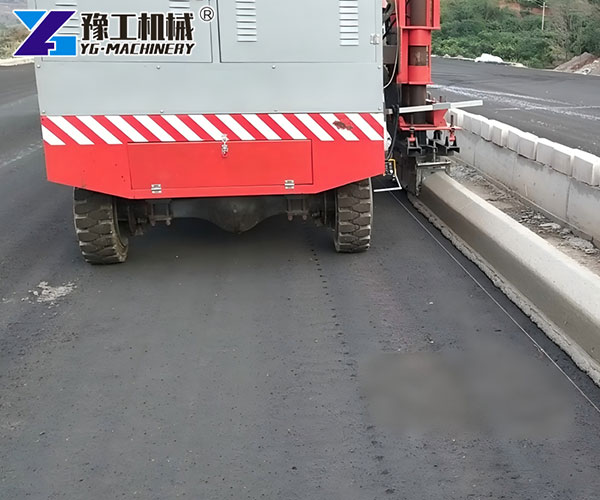
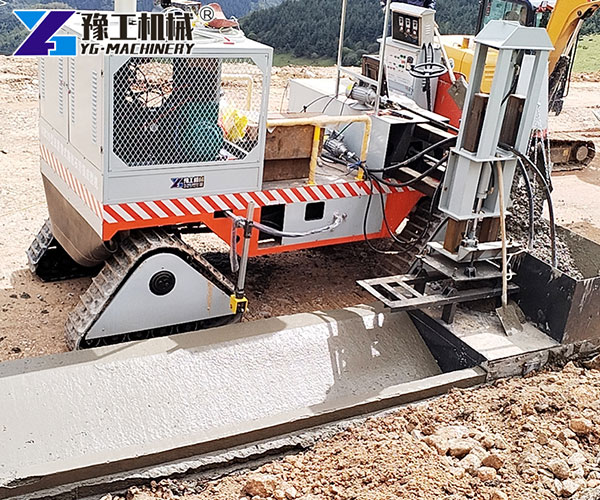
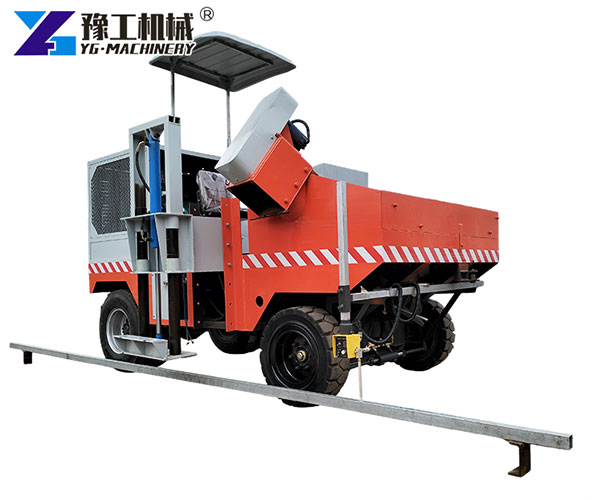
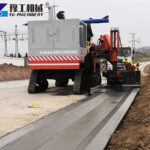
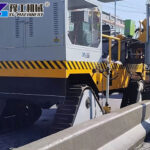
Slipform curb machine for roads
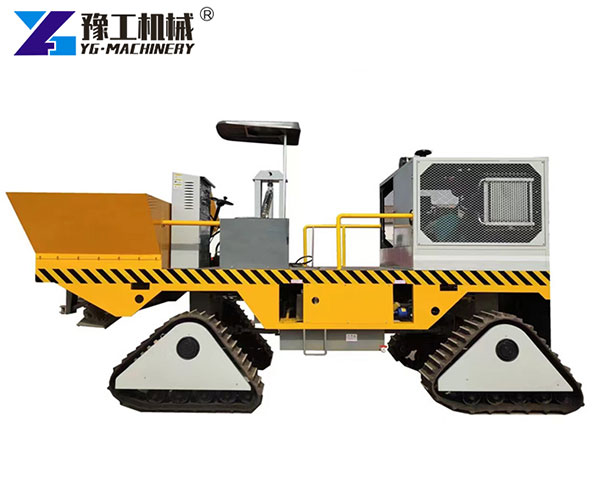
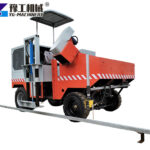
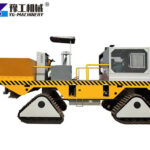
Curb construction machine for municipalities
The Concrete Curb Machine Price is one of the most common questions contractors ask when planning road construction projects. These machines are widely used to form curbs, gutters, and drainage channels along roads, parking lots, and industrial areas. Because different projects require different curb sizes and construction capacity, the cost of the machine can vary significantly.
In modern infrastructure projects, contractors often use a slipform curb machine to improve construction efficiency. Unlike traditional curb-forming methods, slipform technology allows concrete to be shaped continuously without using fixed molds. This reduces labor costs and increases construction speed.
When evaluating a concrete curb machine for sale, buyers usually focus on several important factors:
machine size and production capacity
engine and hydraulic system quality
mold types and customization options
automation level and operating efficiency
Understanding these factors helps contractors choose equipment that fits their project needs and budget.
Different specifications of slipform equipment can lead to large differences in Concrete Curb Machine Price. Several technical and structural factors play a role in determining the overall equipment cost.
Machine Size And Construction Capacity
Machine size and construction capacity are among the most important factors affecting the Concrete Curb Machine Price.
Small machines are commonly used for:
sidewalks
rural roads
farm infrastructure
These projects usually require compact equipment that can work in narrow spaces.
Larger machines are designed for more demanding construction environments, including:
municipal roads
industrial parks
highway auxiliary construction
The forming height, forming width, and overall stability of the machine will influence the production capacity. Higher construction capacity usually requires stronger structural design and larger hydraulic systems, which increases the machine cost.
Engine And Hydraulic System
A slipform curb machine typically relies on a strong power system to maintain stable operation during construction.
Most machines use:
diesel engines
hydraulic drive systems
A high-quality hydraulic system provides several benefits:
stable concrete extrusion forming
smooth and continuous slipform paving
longer equipment service life
Because the power system directly affects machine performance, it is also a key factor influencing the curb and gutter machine price in the global market.
Mold Types And Customization
Mold configuration is another factor that can affect equipment cost.
Common mold types include:
curb molds
curb and gutter molds
drainage channel molds
barrier molds
Some contractors also use the same machine as a slipform barrier machine by installing barrier molds.
If a machine supports quick mold replacement, one piece of equipment can complete several types of construction work. This flexibility increases the machine’s value and improves project efficiency.
Typical Concrete Curb Machine Price In The Global Market
In the international construction equipment market, the Concrete Curb Machine Price usually depends on several technical and commercial factors.
The most common factors include:
machine size
automation level
mold configuration
engine brand
shipping distance
Machines produced by well-known European or American brands often have higher prices because of their technology and brand reputation. However, many contractors now consider equipment produced in China because these machines often provide a better balance between performance and cost.
For contractors working in developing regions, choosing a reliable slipform curb machine for sale with competitive pricing can significantly reduce equipment investment while still achieving high construction efficiency.
Purchasing a curb forming machine is usually seen as a long-term investment for construction companies. When used regularly on road projects, the machine can quickly generate value.
Reduced Labor Requirements
Traditional curb construction methods usually require:
installing wooden or steel forms
manual concrete pouring
multiple workers for shaping and finishing
This process is time-consuming and labor-intensive.
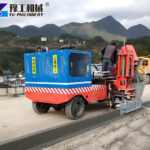
A slipform curb machine works differently. The machine continuously forms the curb while moving forward. Because of this automated forming process, contractors can:
Reduce the number of workers on site
simplify construction steps
lower overall labor costs
Faster Project Completion
Slipform technology greatly improves construction speed.
With a properly configured machine, contractors can form curbs in a continuous process without stopping for form installation or removal.
This faster workflow is especially useful for projects such as:
municipal road construction
industrial park infrastructure
agricultural access roads
Higher efficiency allows contractors to complete projects earlier and take on more construction contracts.
Choosing The Right Concrete Curb Machine
When selecting equipment, contractors often focus on the required curb forming height for their projects.
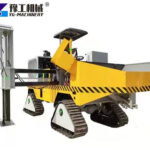
Both machines share a similar structure and operating system. The main difference is the forming capacity. Because of this difference, each model fits different project sizes.
Contractors working on smaller road projects or rural infrastructure often prefer the YG20 model, while projects with larger curb dimensions may require the higher forming capacity of the YG30.
When evaluating a concrete curb machine for sale, understanding the required forming height helps ensure the equipment matches the project’s needs.
As infrastructure construction continues to grow around the world, more contractors are turning to slipform technology.
A slipform curb machine provides several important advantages compared with traditional curb construction methods.
Key benefits include:
continuous concrete forming
consistent curb quality
lower labor costs
Higher construction efficiency
Because of these advantages, slipform curb machines are now widely used in many projects, including:
road construction
municipal engineering
industrial infrastructure
agricultural road systems
For contractors who want reliable and efficient equipment, a modern slipform barrier machine or curb forming machine can significantly improve project productivity and construction quality.